Many smartwatches, fitness bands, and even rings now come with advanced sleep tracking. Every morning, they present you with a colorful chart and a 'sleep score,' claiming to know how well you rested. But how do they get this information from your wrist, and what does it all mean?
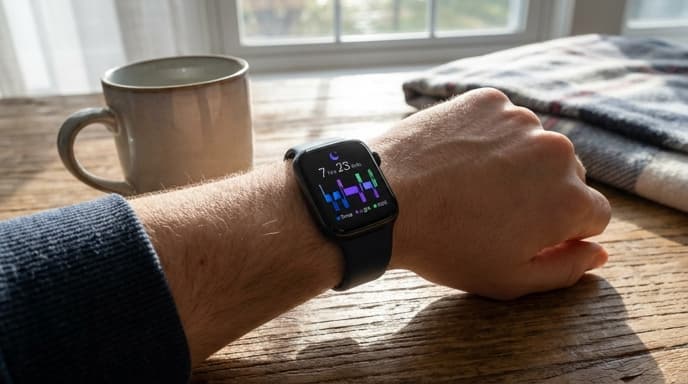
While these devices are not medical-grade tools, they can provide interesting insights into your patterns and habits. This guide will explain the basic technology behind sleep trackers and break down the most common metrics they measure, so you can better understand your own data. This information is for educational purposes and is not a substitute for professional medical advice.
How Sleep Trackers Work
Consumer sleep trackers primarily rely on two types of sensors to estimate what's happening while you're asleep:
- Accelerometer: This is a motion sensor that detects movement. The core idea is simple: when you are awake or in a light stage of sleep, you tend to move more. When you are in deep sleep, you are very still. The tracker uses the absence or presence of movement to make a basic assessment of your sleep state.
- Optical Heart Rate Sensor: This is the flashing green light on the back of most wearables. It measures your heart rate by detecting changes in blood flow in your wrist. Your heart rate naturally lowers and varies in predictable patterns throughout the different sleep stages.
By combining data from these two sensors, the device's algorithm creates an estimate of your sleep patterns for the night.
Understanding Sleep Stages
Most trackers will break your night down into three or four main stages. These are estimates based on your movement and heart rate data.
- Light Sleep: This is where you spend most of the night. It's the stage where your body begins to relax, and your heart rate and breathing slow down. It's easier to be woken up during light sleep. This stage is still beneficial for mental and physical recovery.
- Deep Sleep: During this stage, you are most still, and your heart rate and breathing are at their lowest levels. This is considered the most physically restorative stage of sleep, important for muscle repair, growth, and immune system function.
- REM (Rapid Eye Movement) Sleep: This is the stage most associated with vivid dreaming. Your brain is highly active, nearly as active as when you're awake, but your body's muscles are temporarily paralyzed to prevent you from acting out your dreams. Your heart rate and breathing become more variable. REM sleep is believed to be crucial for memory consolidation and emotional processing.
Heart Rate and Heart Rate Variability (HRV)
Beyond the sleep stages, many trackers also report on your heart's activity during the night.
Resting Heart Rate (RHR): This is your heart rate when you are fully at rest. A lower resting heart rate while sleeping is generally an indicator of good cardiovascular fitness and recovery.
Heart Rate Variability (HRV): This is a more advanced metric. It measures the tiny variations in time between each of your heartbeats. A higher HRV is often associated with a well-rested state and a resilient nervous system, indicating that your body is ready to perform. A low HRV can sometimes be a sign of stress, overtraining, or potential illness. Many devices use your nightly HRV as a key component of their 'readiness' or 'recovery' scores.
FAQ: Sleep Tracker Data
How accurate are sleep trackers?
Consumer wearables are generally good at tracking sleep duration (how long you were asleep). They are less accurate at identifying the specific sleep stages compared to a clinical sleep study (polysomnography). Think of them as providing a good estimate and highlighting trends over time.
What is a good 'sleep score'?
Most apps score your sleep out of 100, based on duration, time spent in each stage, and other factors. Instead of focusing on a specific number, it's more helpful to look for trends. Are you consistently getting low scores on weeknights? What habits might be contributing to that?
My tracker said I had very little deep sleep. Should I be worried?
A single night of unusual data is rarely a cause for alarm. Factors like stress, a late meal, or alcohol can affect sleep stages. If you consistently have concerns about your sleep quality or feel tired despite spending enough time in bed, it's best to speak with a healthcare professional.
Key Takeaways
- Sleep trackers use motion and heart rate sensors to estimate your sleep patterns.
- They break sleep down into stages: light, deep (for physical recovery), and REM (for mental recovery).
- Trackers also measure resting heart rate and Heart Rate Variability (HRV) as indicators of recovery.
- These devices are not medical tools but are useful for observing personal trends and habits over time.
- If you have persistent concerns about your sleep, consult a doctor.
Related Reading
- Ergonomics for Gamers: How to Set Up Your Desk for Comfort
- How to Use Your Phone's Built-In Screen Time Tools
- A Beginner's Guide to Telehealth Apps